

Home services marketing is the difference between a business that grows and one that stalls the moment referrals slow down — and according to BrightLocal, 98% of consumers used the internet to find a local business in 2024. Your next customer is already searching. The question is whether they find you or your competitor. This guide covers every channel that matters — local SEO, paid ads, Google Business Profile, reviews, and content — and what each one looks like across the main home service verticals.
Why Referrals Aren't Enough Anymore
Referrals are great. They close fast, they trust you before they call, and you don't pay for them. But they're also completely outside your control. A slow month, a bad winter, a key referral partner who retires — and suddenly the phone stops ringing.
The trades and home services businesses that grow consistently don't wait for word of mouth. They build marketing systems that generate leads on demand, regardless of season or economic mood. That's what separates a $500K/year contractor from a $2M one.
The good news: the bar in most local markets is still surprisingly low. A solid Google Business Profile, a handful of strong reviews, and basic local SEO will outperform most of your competitors. Add Google Ads and you're untouchable in most mid-size markets.
Local SEO — The Foundation Every Home Service Business Needs
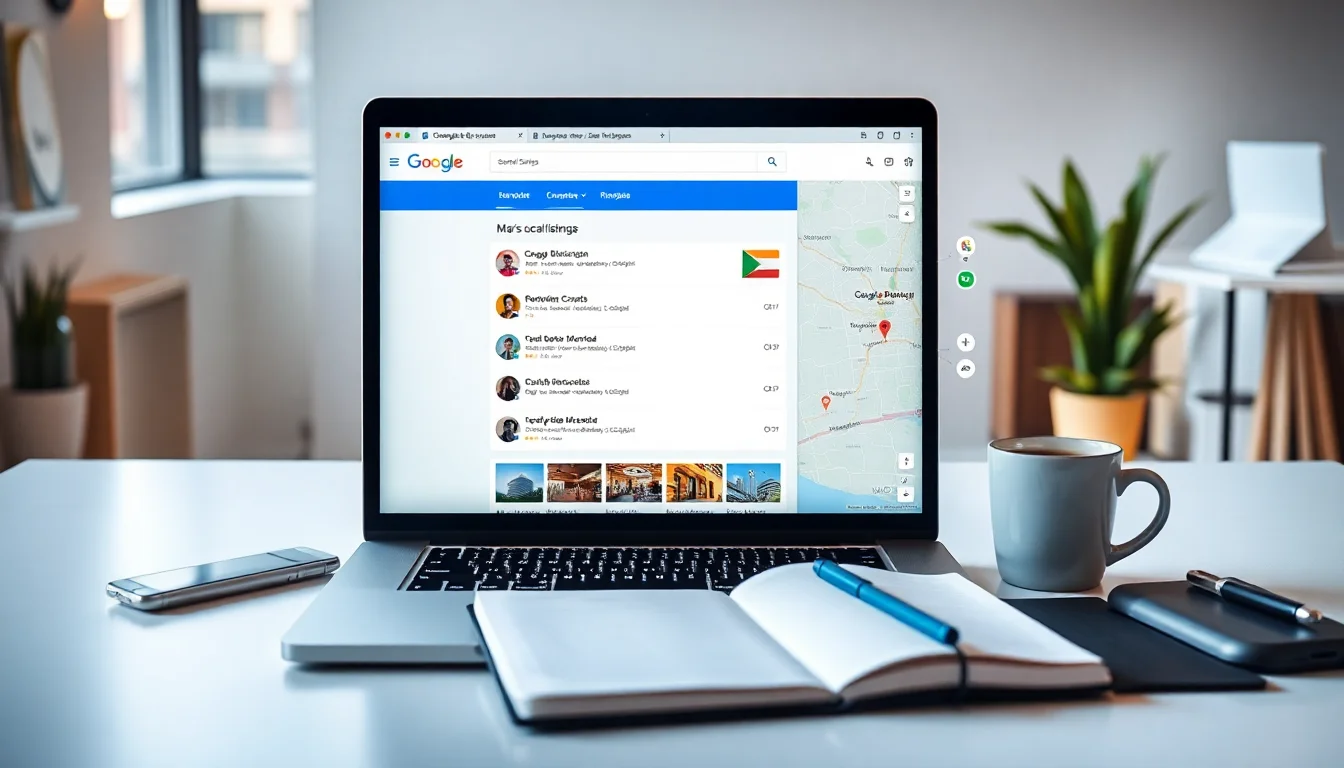
If someone types "emergency plumber near me" or "HVAC repair Orlando" at 7pm on a Tuesday, the businesses that show up in the map pack get the call. The ones buried on page 2 don't. Local SEO services for home service businesses aren't complicated, but they do require consistency — and most businesses skip the basics.
Your Google Business Profile is the single most important asset you have for local search. It needs a complete category, your service areas listed explicitly, regular photo uploads, and fresh posts at least twice a month. If your GBP looks like it was set up in 2019 and forgotten, Google has no reason to rank you above the competitor who's actively managing theirs.
On your website, every service you offer and every area you serve should have its own page. Not a paragraph — a page. "HVAC repair in Kissimmee" and "HVAC repair in Clermont" are different searches. One page cannot rank for both. This is where most home service websites leave serious money on the table.
Tip: Name-Address-Phone consistency across every directory (Google, Yelp, Angi, HomeAdvisor, your website) is a foundational ranking signal. One inconsistent listing doesn't kill you. Fifty of them do.
Google Ads — Getting Calls While SEO Builds
Local SEO takes time. Three to six months before you see meaningful movement is realistic. Google Ads management fills that gap — and for high-intent searches like "roof replacement cost" or "emergency water heater installation," the people clicking those ads are ready to book, not browsing.
For home services, Local Services Ads (LSAs) sit above standard search ads and show your Google rating, your business name, and a direct call button. Google's Local Services Ads platform charges per lead, not per click, which makes budgeting more predictable for trades businesses. The catch: you need to pass Google's background check and maintain a strong review profile to stay eligible.
Standard search campaigns still earn their place. Targeting high-commercial-intent keywords — "cost to remodel bathroom," "air conditioning not cooling," "best painters near me" — puts you in front of buyers at the exact moment they're comparing options. The margin on a single HVAC replacement or a kitchen remodel dwarfs the ad spend many times over.
Channel | Speed to leads | Cost model | Best for
Local SEO — 3–6 months — Monthly retainer — Long-term, compound growth
Google Search Ads — Days — Cost per click — Immediate, high-intent leads
Local Services Ads — Days — Cost per lead — Call volume, verified trust
Content marketing — 6–12 months — Monthly retainer — Authority, long-tail SEO
Reviews — The Channel Most Businesses Ignore Until It Hurts
Eighty-seven percent of consumers read online reviews for local businesses before making a decision. That's not a marketing stat — that's a buying behavior fact. If your business has 12 reviews and your competitor has 200, the customer doesn't need to read the reviews. They've already made their choice.
The businesses winning on reviews aren't luckier. They have a system. After every completed job, a text goes out with a direct link to the Google review page. That's it. No begging, no incentivizing — just making it frictionless at the right moment. Most happy customers don't leave reviews because they forget. Remove the friction and the volume follows.
Respond to every review — the good ones and the bad ones. A thoughtful, professional response to a negative review tells the next potential customer more about your business than the complaint itself. Ignoring bad reviews is worse than getting them.
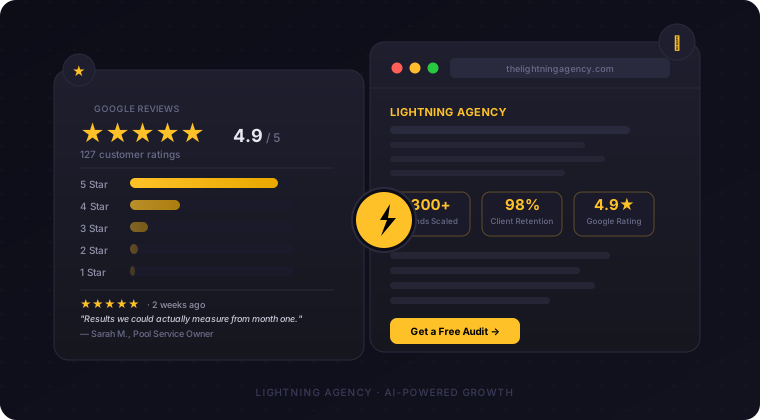
If you want to see what a strong review and local SEO strategy looks like in practice, the Pool Mechanic case study shows exactly how this plays out for a home services business in a competitive local market.
Home Services Marketing by Vertical
The core channels — SEO, ads, GBP, reviews — apply everywhere. But the search behavior, the buying cycle, and the competitive landscape differ by trade. Here's what matters most in each vertical.
Remodeling and Contractors
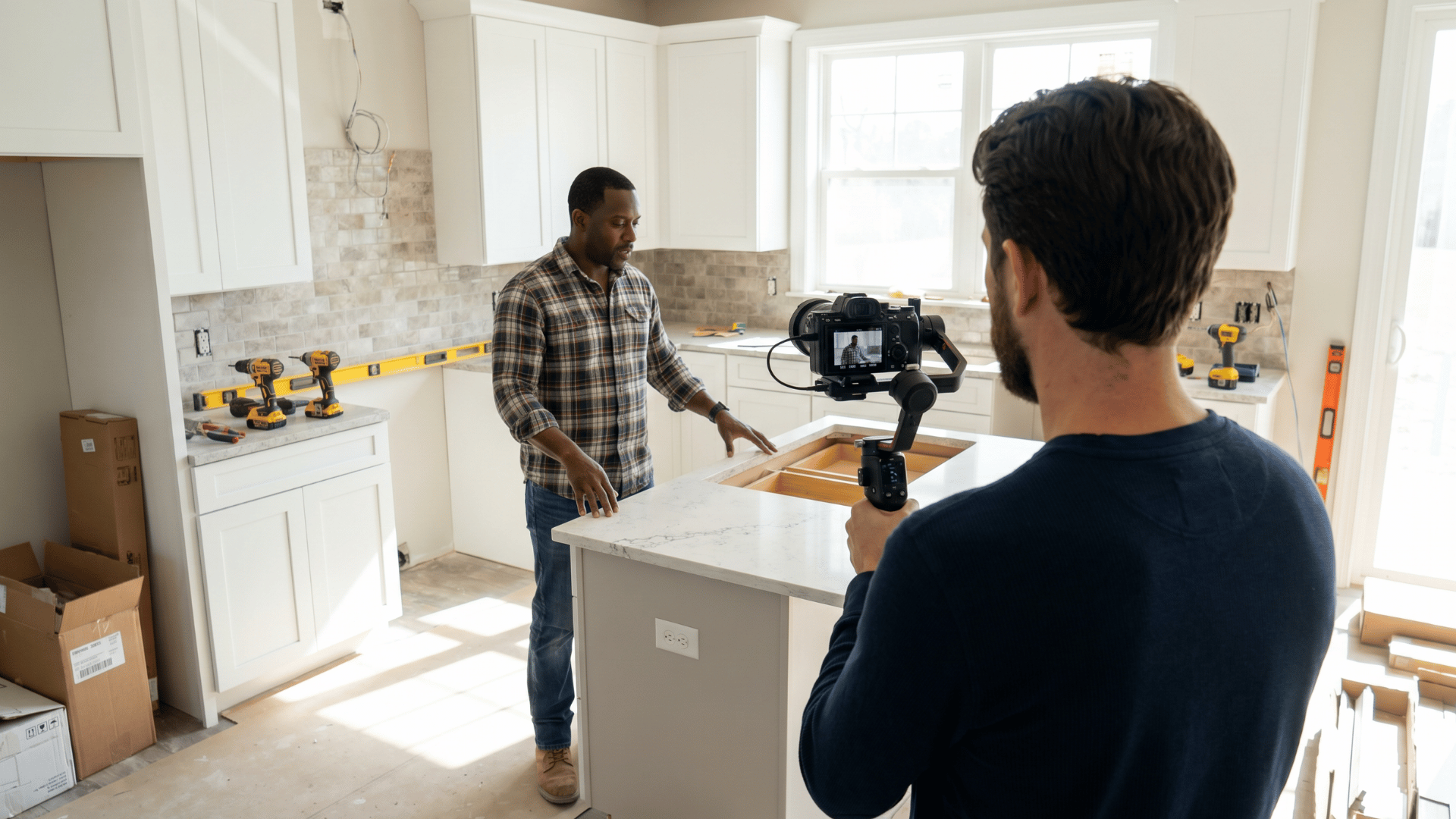
Remodeling has one of the longest consideration cycles in home services — customers research for weeks before they call. Remodeling contractor marketing needs content that answers the questions buyers ask during that research phase: "how much does a kitchen remodel cost," "what to look for in a remodeling contractor," "how long does a bathroom renovation take." Win the research phase and you get the call.
HVAC
HVAC splits neatly into emergency (AC stopped working at 3pm in August) and seasonal (furnace tune-up before winter). HVAC marketing needs both: paid ads for the emergency searches that convert same-day, and SEO content for the seasonal planning searches that build your pipeline months in advance. Don't build a strategy for only one.
Plumbers
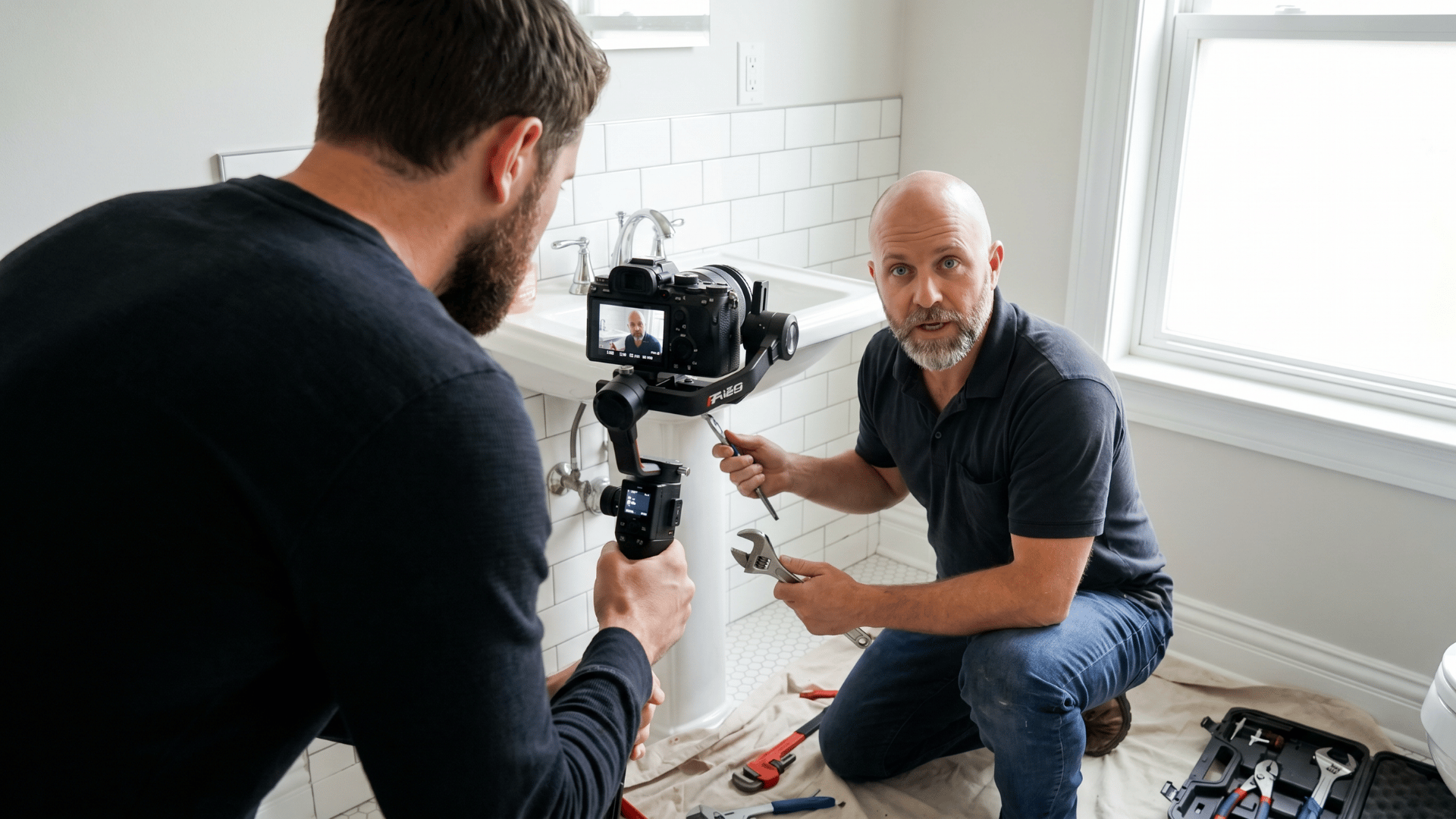
Plumbing is heavily emergency-driven — burst pipes and blocked drains don't wait for a Monday morning quote. Plumber marketing lives and dies on response time and trust signals. Fast-loading website, prominent phone number, and Google Ads running 24/7 with call extensions are non-negotiable. SEO for "emergency plumber [city]" is one of the highest-value local rankings a plumber can hold.
Painters
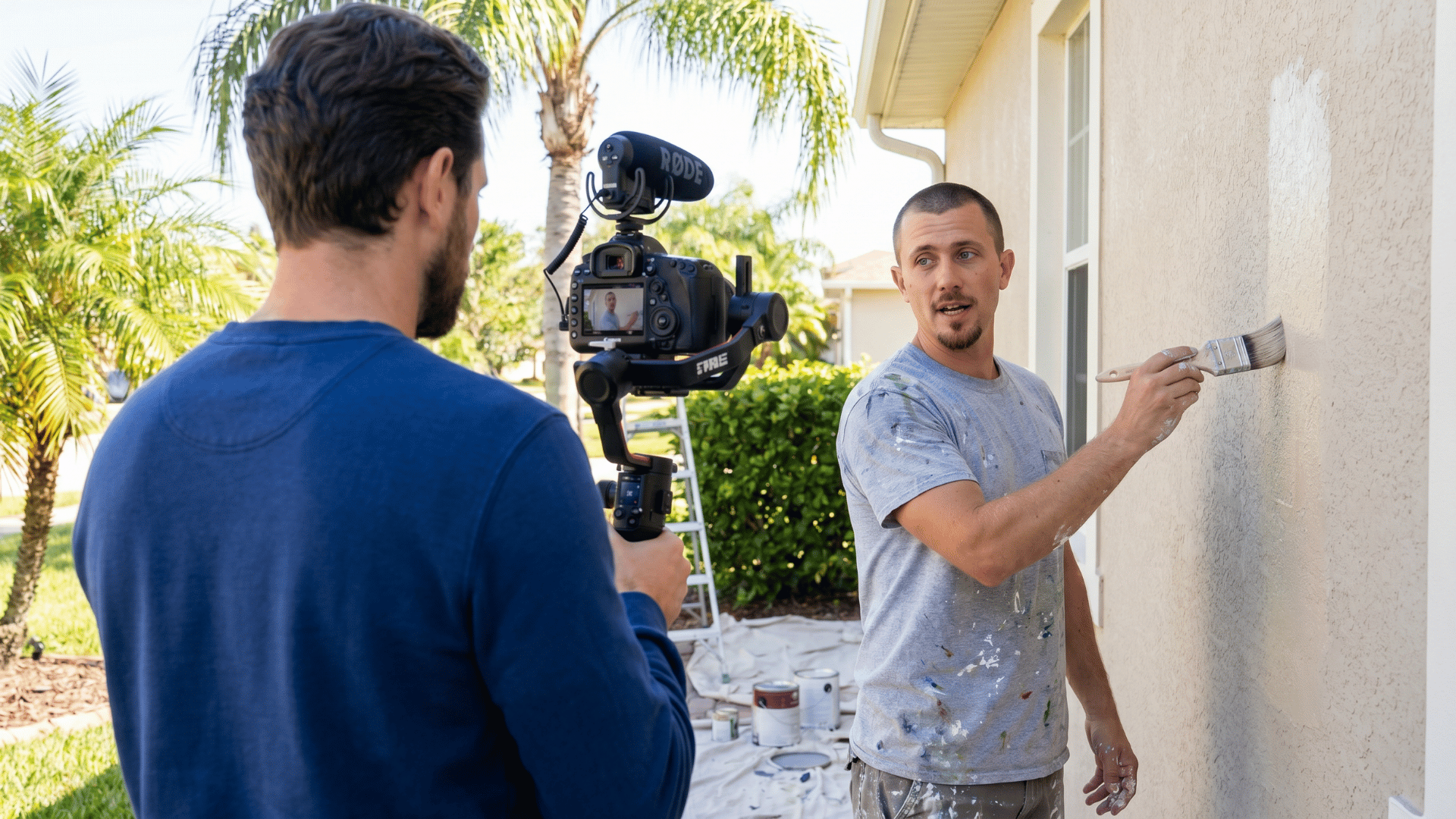
Painting is visual, which means your marketing needs to be too. Painter marketing performs best when before-and-after photos are baked into every page and every ad. Reviews that specifically mention "clean," "on time," and "no mess" address the objections homeowners actually have. Interior and exterior painting are different buyer journeys — target them separately.
Landscapers
Landscaping has two distinct markets: residential maintenance (recurring revenue) and commercial contracts (high value, long relationship). Landscaper marketing for residential is mostly local SEO and GBP — people search for lawn care when theirs looks bad. For commercial, LinkedIn outreach and targeted Google Ads around facilities management keywords are more effective than organic alone.
If you're in Central Florida, we work across all of these verticals locally — see what that looks like at our Orlando digital marketing agency page.
Content Marketing for Home Services — Not Just Blogging
Content marketing for trades businesses isn't about publishing thought leadership pieces nobody reads. It's about answering the specific questions your buyers type into Google at every stage of the decision process. "How much does it cost to replace a roof in Florida" is a buying question. A well-written page that answers it ranks, gets traffic, and books jobs.
The content that works for home services falls into three buckets: cost guides (highest commercial intent), comparison guides ("spray vs roll painting," "gas vs electric water heater"), and local service pages for every area you operate in. Most businesses have none of these. Building even ten solid pages puts you ahead of the majority of your local competitors.
Video is increasingly part of this mix. Short-form job footage, before-and-after walkthroughs, and "what to expect" process videos build trust faster than text alone — and they feed your social channels at the same time. If you're producing video content, the same footage that goes on YouTube can be cut for Instagram Reels, embedded on service pages, and sent in follow-up emails.
Common Mistakes Home Services Businesses Make with Marketing
1. Relying on one channel: Angi or HomeAdvisor leads dry up, the contract ends, and there's no backup. Build multiple traffic sources so no single platform controls your pipeline.
2. No tracking on what's actually working: "Most of our leads come from Google" isn't analytics — it's a guess. If you don't have call tracking and form conversion data by channel, you're flying blind with your marketing budget.
3. Generic service pages: One page for "plumbing services" trying to rank for every suburb you serve. Google can't work out what you're most relevant for. Neither can the customer.
4. Ignoring GBP after setup: A Google Business Profile that hasn't had a new photo or post in six months signals to Google that you're less active than competitors who are consistently updating theirs.
5. No review system: Waiting for happy customers to leave reviews organically produces a trickle. A systematic post-job text sequence produces volume. The difference between 20 reviews and 200 reviews is almost entirely process, not luck.
6. Spending on ads with a slow or broken website: If your page loads in four seconds on mobile and the phone number is buried in the footer, paid traffic converts at a fraction of what it should. Fix the landing page before scaling the budget.
Get a Home Services Marketing Plan That Actually Books Jobs
Most home service business owners we talk to have tried something — an SEO agency that promised page one and delivered reports full of impressions, or Google Ads they ran themselves until the budget disappeared. The problem is rarely effort. It's strategy that's disconnected from how your specific buyers actually search and decide.
We build marketing systems for trades and home service businesses that start with your data — your search landscape, your competitors' weaknesses, your highest-margin services — and build from there. No templates, no guesswork, no 12-month contracts that protect us instead of you.
Book your free strategy session or get in touch to see what's included.
Frequently Asked Questions
A common benchmark is 5–10% of target revenue. A contractor aiming for $1M in annual revenue should be comfortable investing $50K–$100K across marketing channels. That said, the right number depends on your market, your margins, and whether you're in growth mode or maintaining existing volume. Start with what you can track and scale what's working.
Google Ads — specifically Local Services Ads combined with standard search campaigns — generate leads within days of launch. They're not a substitute for long-term SEO, but they're the fastest legal way to put your business in front of people actively searching for what you do right now.
It depends on the goal. Facebook and Instagram ads work well for planned, higher-ticket projects — kitchen remodels, landscaping transformations, room additions — where visual results sell the job. They're less effective for emergency services, where nobody's browsing Instagram when their pipe has burst. Organic social builds brand familiarity but rarely drives direct calls at volume.
Realistic timeline: 3–6 months to see meaningful ranking movement, 6–12 months for consistent lead volume from organic search. That assumes proper technical SEO, regular content, and active GBP management from day one. Businesses with an established site and existing content move faster than those starting from scratch.
Yes — if you want to rank in those cities. One generic "service area" page covering fifteen suburbs doesn't rank for any of them. Each location needs its own page with specific content, local references, and ideally some local schema markup. It's more work upfront, but it's the only way to capture local search traffic across multiple service areas.













.png)











.png)
.png)
.png)
.png)
.png)

.png)
.png)
.png)
.png)
.png)


.png)
.png)


