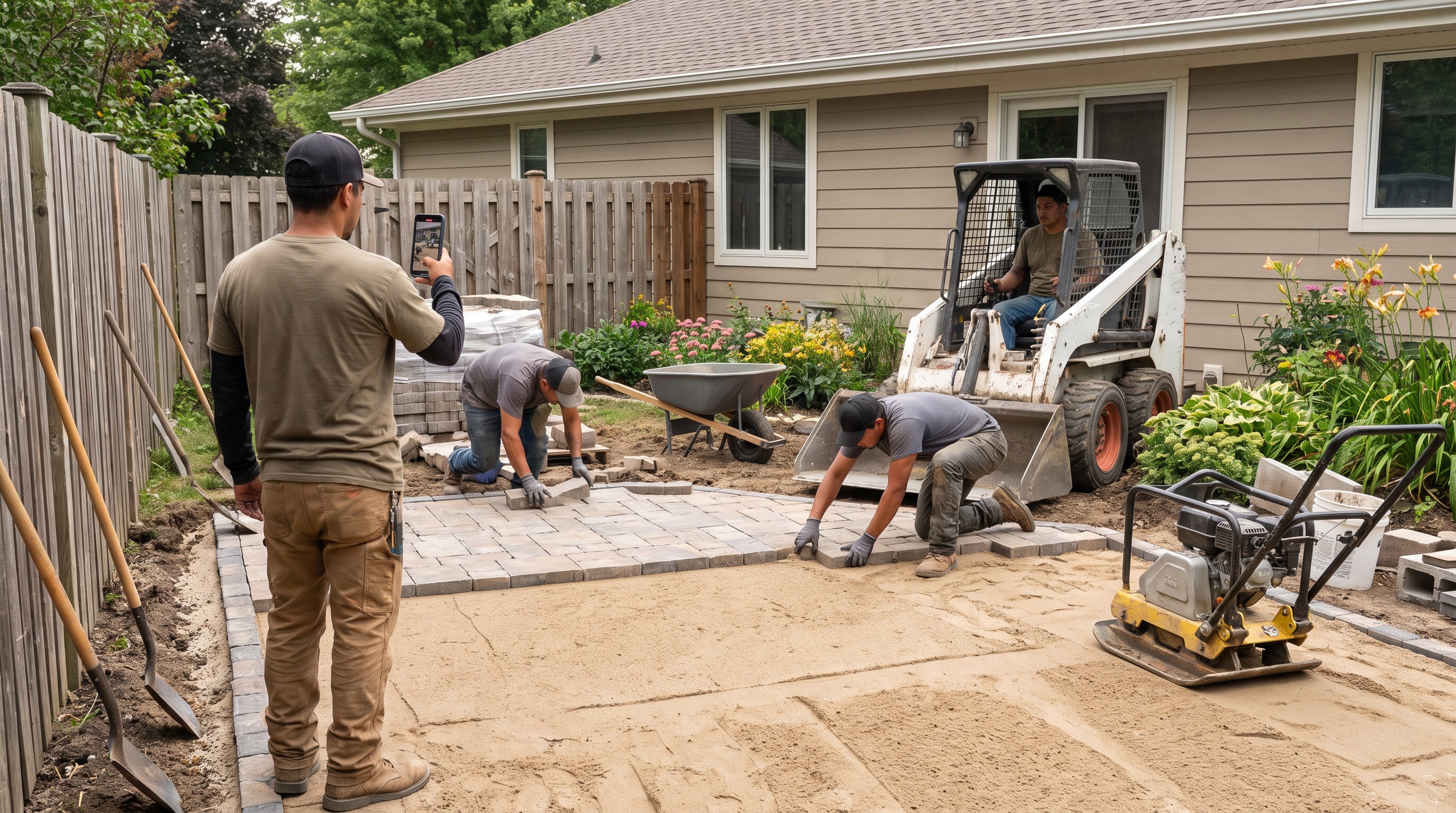
Social media marketing for landscaping companies is different from social for restaurants or retail shops. Your buyers aren't scrolling for inspiration — they're scrolling for proof that your crew shows up, does clean work, and won't disappear halfway through a hardscape project. If your Facebook page hasn't posted since last spring and your Instagram is six photos of a logo, a competitor two towns over with an active feed is picking up the estimate requests you should be getting.
Why Landscaping Companies Can't Treat Social Media Like an Afterthought
Landscaping is a visual, local, trust-driven business. People don't hire a crew to redo their front yard based on a Google review alone — they want to see the work. A clean before-and-after, a drone shot of a finished install, a quick video of your crew laying sod in under a minute. Social media is where that proof lives, and it's where homeowners check before they ever fill out a contact form.
The problem is most landscaping companies run social media the way they run their invoicing — as an afterthought, handled whenever there's a slow week. That inconsistency shows. A homeowner comparing three quotes will click through to your Instagram, see three posts from eight months ago, and quietly cross you off the list. Your social media marketing needs to look as sharp and consistent as your actual landscaping work — because right now, for most prospects, it's the only part of your business they see before they call.
The Content Problem: Dead Pages and Stock Photo Fatigue
Walk through the Facebook pages of ten landscaping companies in any mid-sized market and you'll see the same pattern: a logo profile picture, a few stock photos of a manicured lawn that isn't theirs, and a last post from the off-season. None of it says anything about who actually did the work or what it's like to hire them.
Homeowners can tell the difference between a stock photo and a real job site in about two seconds. Real content — your crew mid-install, a drainage fix before the sod goes down, a client walking their new patio for the first time — builds more trust in one post than a month of generic maintenance tips ever will. Our social content guide for local businesses covers exactly how to turn ordinary job sites into content that actually stops the scroll.
Consider the difference between a post showing a crew member pointing at a stock-photo lawn and a genuine ten-second video of that crew edging a driveway, laying sod along a walkway, or wrapping up a French drain installation before backfilling it. The second version earns comments and shares because viewers recognize the work as something that could be their own yard. A smartphone shot taken during a lunch break, with natural light and a caption noting the neighborhood and the service performed, routinely beats a professionally staged photo that could belong to any company in the country. The fix isn't hiring a video crew — it's building a habit of pulling out a phone for thirty seconds before cleanup starts and again once the job wraps, so every completed project leaves behind a ready-made before-and-after pair instead of nothing at all.
What Actually Moves the Needle on Social for Landscaping Companies
Three things consistently drive results for landscaping clients, and none of them are complicated. First, job-specific proof: real before-and-after shots, short install videos, and seasonal work (mulch installs in spring, holiday lighting in winter, storm cleanup after a big weather event) posted while demand for that exact service is highest. Second, local specificity — tagging neighborhoods, mentioning actual city names, and showing up in the feeds of people who live where you work, not a generic national audience. Third, consistency. A landscaping company posting twice a week, every week, outperforms one posting ten times in a burst and then going dark for two months.
Paid social amplifies all of it. A strong organic post showing a hardscape transformation, boosted to homeowners within a 15-mile radius during peak season, routinely outperforms a cold ad with no social proof behind it. That's where paid media advertising and organic content work together instead of competing for budget. According to the National Association of Landscape Professionals, demand for residential landscaping services continues to track closely with seasonal homeowner spending patterns — which is exactly why timing your content to the season matters as much as the content itself.
Turning Followers Into Booked Estimates
Likes don't cut grass and comments don't pour concrete. The goal of social media marketing for landscaping companies isn't a bigger follower count — it's more estimate requests landing in your inbox or your phone. That means every post needs a clear next step: a link to a contact form, a "DM us for a free quote" call to action, or a click-to-call button on a boosted post.
It also means tracking what actually happens after someone clicks. According to BrightLocal's Local Consumer Review Survey, the large majority of consumers now research a local business online before contacting them — which means your social presence is doing real pre-sales work whether you're tracking it or not. We tie social activity back to actual leads and jobs booked, not just engagement metrics, so you know which posts are making you money and which ones are just noise.
In practice, that looks like swapping a plain "book now" caption for something closer to "message us this week and we'll have your spring cleanup estimate back within 24 hours," which gives homeowners a reason to act instead of just scrolling past. Response time matters just as much as the offer itself — a DM that sits unanswered for two days reads the same as a voicemail nobody returns, and it undoes whatever trust the photo or video built. We also set up simple tracking on the links used in bios and boosted posts, so a company running spring cleanup promotions can see whether last week's drainage-repair video actually produced form submissions or just likes, and adjust the following week's content accordingly.
How Lightning Agency Builds Your Landscaping Social Strategy
We start with your service area, your busiest seasons, and your actual job photos — not a generic content calendar pulled from a template. Every landscaping client gets a posting schedule built around real seasonal demand: spring cleanups and mulch in March and April, irrigation and drought-tolerant landscaping through summer, leaf cleanup and holiday lighting setup in the fall and winter. That's paired with our broader content marketing work, so the same job site visit that generates a social post also feeds a blog article, a case study, or a location page that helps you rank on Google.
From there, our digital marketing strategy ties social into the rest of your marketing — your Google Business Profile, your review generation, and any paid campaigns running at the same time. We've written more on how the pieces fit together in our guide to landscaping marketing strategies for rapid growth, and how it pairs with organic search in our piece on SEO marketing for landscaping companies.
Where Social Fits Into Your Bigger Marketing Picture
Social media doesn't work in isolation, and we don't sell it that way. A homeowner might see your Instagram post about a drainage fix, then search your business name on Google, check your Google Business Profile, read your reviews, and only then fill out a form. Every one of those touchpoints needs to tell the same story — reliable, local, does clean work.
That's why we build social as one piece of a connected system rather than a standalone service. If you're also running paid search or need a full marketing consulting relationship to figure out where your budget should actually go, that conversation happens alongside the social strategy, not after it. And if you run a seasonal crew doing both landscaping and exterior cleanup work, our pressure washing marketing page covers the overlap in demand and content that a lot of our landscaping clients run into.
The same consistency applies across every platform a homeowner might check, not just the one where the original post appeared. A neighborhood Facebook group thread asking for landscaper recommendations, a Nextdoor post about a storm-damaged tree, or a simple Google search for "landscaping near me" can all surface your business within the same afternoon, and each one needs to reflect the same crew, the same service area, and the same tone. When the photos on your profile match the reviews underneath your Google Business Profile and the pricing conversation your sales team has on the phone, homeowners stop second-guessing and start booking.