

SEO marketing for landscaping companies works differently than generic home service marketing because "landscaping" isn't one business — it's a dozen different businesses wearing the same green truck. A hardscaping contractor chasing a $40,000 patio installation needs a different keyword strategy than a lawn care company fighting for an $80-a-month mowing contract. Most agencies build one SEO plan and apply it to every landscaping client that walks through the door. We don't, and that's exactly why their results stall out around page two.
The landscaping industry generates well over $130 billion a year in the United States, and the companies capturing the biggest share of that aren't always the best crews — they're the ones showing up first when a homeowner searches. According to BrightLocal, the majority of consumers now research local businesses online before they ever pick up the phone. If your landscaping business isn't visible during that research window, you're not losing jobs to better work. You're losing them to better search visibility.
Why SEO Marketing for Landscaping Companies Isn't One-Size-Fits-All
"Landscaping" covers businesses with wildly different customers, price points, and search behavior. A lawn care company is fighting for recurring monthly contracts. A hardscaping contractor is fighting for one big-ticket project a homeowner might buy once in a decade. A landscape designer is selling a vision before a single shovel touches dirt. An irrigation specialist gets a call when something's broken and the customer wants it fixed today, not next week.
Google treats these search queries differently, and your content needs to reflect that. "Lawn mowing service near me" is transactional and price-sensitive. "Landscape design ideas for small backyard" is an inspiration search, further from a purchase decision. "Sprinkler system repair" is urgent and hyper-local. Build one generic services page trying to rank for all three, and you'll rank for none of them well.
This is the gap we see most often when we audit a landscaping company's existing setup: broad, vague content built around "landscaping" as a single category, instead of content mapped to the specific sub-industries and services that business actually sells. We cover this in more depth in our guide to SEO for landscaping companies, including how to structure your site so each niche gets its own path to ranking.
The Core Pillars of SEO Marketing for Landscaping Companies
Four fundamentals determine whether you show up when it matters. How you execute each one shifts depending on your segment of the industry, but skipping any of them guarantees you stay invisible to the homeowners already searching for what you sell.
Location-Based Keywords
Your customers aren't searching "landscaping services." They're searching "landscape design Winter Garden" or "hardscape contractor Clermont." Google prioritizes local results for home service searches, so location-specific keywords are your foundation, not an afterthought.
Target your primary service area plus the surrounding suburbs. If you work out of Orlando, that means Kissimmee, Winter Garden, and Clermont too. Build focused pages for each location with genuinely different content — not the same paragraph with the city name swapped out. Our local SEO work is built around exactly this: location pages that actually say something unique about serving that area.
Tip: Pull your Google Business Profile Insights to see which neighborhoods generate the most calls, then build out location content for those areas first instead of guessing.
Service-Specific Content by Niche
Homeowners search for specific solutions, not generic landscaping. That means separate, detailed pages for "artificial turf installation," "French drain installation," "paver patio design," and "irrigation system repair" — each written to answer the exact question someone typed into Google, not a watered-down version that tries to cover everything at once.
A hardscaping company that bundles patios, retaining walls, and outdoor kitchens into one vague "hardscaping services" page is fighting for a broad term it will likely never rank for. Three focused pages, each targeting a specific project type, will outperform one generic page almost every time. We break down niche-by-niche strategy in our landscaping marketing strategies guide, and many of the same principles apply if you run a pool company selling both maintenance and big-ticket installations.
Google Business Profile and Reviews
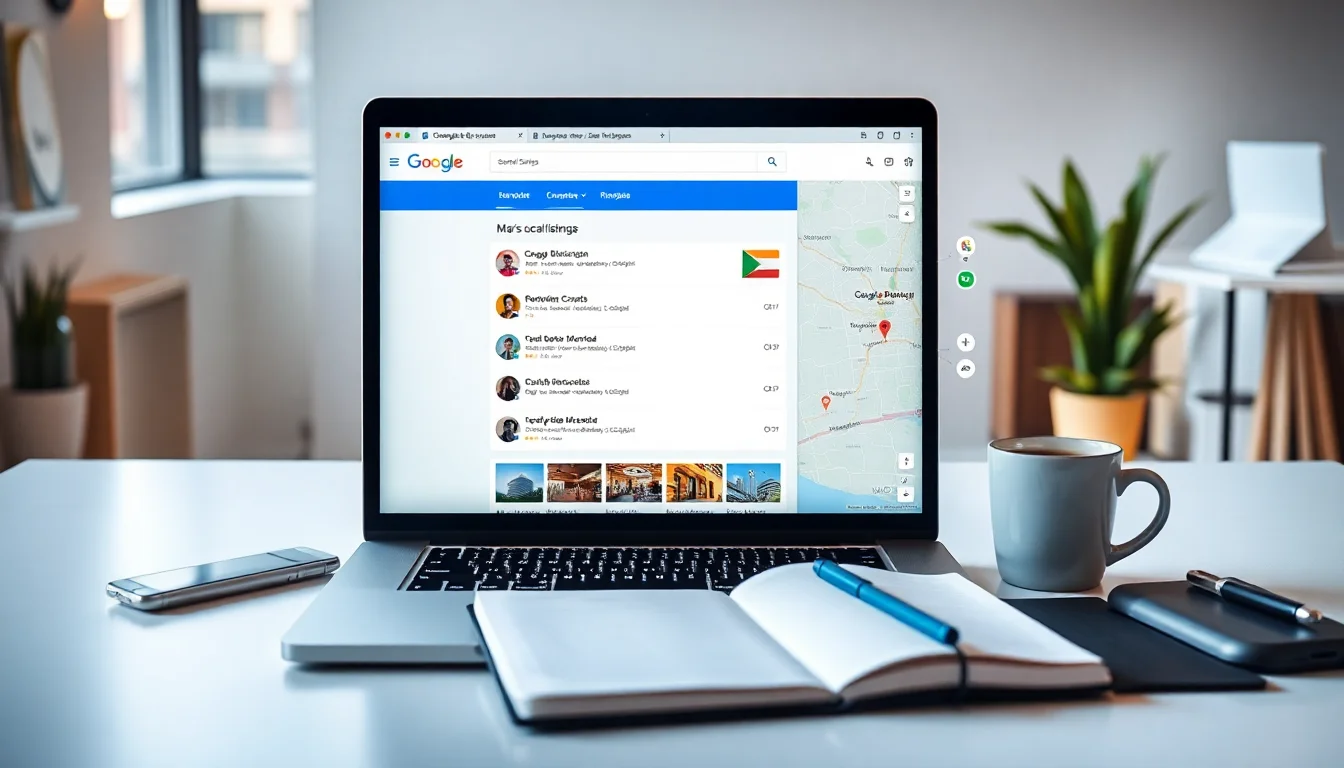
For local searches, your Google Business Profile often matters more than your website. Complete every field, post updates when you finish a project, and upload real job photos — not stock images. A profile with 40 reviews averaging 4.8 stars beats a prettier website with five reviews, nearly every time.
Respond to every review, good or bad. A thoughtful reply to a negative review often does more for your credibility than a dozen five-star ones sitting unanswered.
On-Site Content That Matches Search Intent
Your website needs separate content types for separate intents: service pages for people ready to buy, location pages for people searching by area, and blog content for people still researching. Mixing these together into one generic "about our company" page is why so many landscaping sites rank for nothing.
How Zeus Watches Your Landscaping SEO While Competitors Wait for a Quarterly Report
Most agencies hand you a PDF every quarter showing where you ranked three months ago. By the time you read it, the competitive landscape has already shifted. A competitor added five new service pages. Google updated its algorithm. A new landscaping company in your market started running ads for your best keyword. None of that shows up in a report built around last quarter's data.
Zeus — our monitoring and content engine — tracks your rankings, your competitors' content, and your keyword opportunities daily, not quarterly. If a competitor's hardscaping page suddenly starts outranking yours for "paver patio contractor Clermont," we see it the week it happens, not three months later. If a new search term starts generating volume around "drought-resistant landscaping Orlando," Zeus flags it as a content opportunity before your competitors notice it exists.
Every piece of content we build off that data starts with your actual search performance — your keywords, your gaps, your competitive landscape — never a generic template with your city name dropped in. That's the difference between an SEO report that tells you what already happened and a system that tells you what to do next.
What SEO Marketing for Landscaping Companies Should Cost
Pricing should match the complexity of your business, not a flat rate applied to every landscaping client regardless of how many niches they serve. Here's how our tiers typically break down for landscaping companies:
• Foundation — Monthly Investment: $750; Best For: Single-niche companies (lawn care only, irrigation only) needing Google Business Profile, citations, and rank tracking
• Essentials — Monthly Investment: $1,500; Best For: Companies with 2-3 service lines needing blog content, page optimization, and schema markup to separate each niche
• Growth — Monthly Investment: $2,500; Best For: Full-service landscaping companies (design, hardscape, maintenance, irrigation) needing new pages, 10 blogs a month, and paid ad support
A company that only mows lawns in one city needs far less than a full-service outfit running design, hardscape, and irrigation divisions across five counties. Match your investment to your actual scope, not a sales rep's default package.
Common Mistakes Landscaping Companies Make With SEO
1. Treating every service as one category: Lumping hardscaping, lawn care, and design under a single "landscaping services" page kills your chances of ranking for any of them specifically.
2. Ignoring Google Business Profile: A thin, unmanaged profile loses to a competitor's complete, review-rich profile even when your work is better.
3. Copy-pasting location pages: Swapping the city name on an identical paragraph gets flagged as duplicate content and ranks for nothing.
4. No content for research-stage searches: Skipping blog content means you miss homeowners still deciding what they want before they're ready to hire.
5. Relying on quarterly reports: By the time a static report reaches you, the competitive data inside it is already stale.
6. No review strategy: Reviews compound. Companies that ask for them consistently build a moat competitors can't close quickly.
Most of these mistakes come from agencies building SEO around a generic playbook instead of your specific market. According to the National Association of Landscape Professionals, the industry continues to grow faster than the number of qualified crews available to meet demand — which means the companies winning online are capturing work that already exists, not creating new demand out of nothing.
Frequently Asked Questions
Most landscaping companies spend between $750 and $2,500 a month depending on how many service niches they operate and how competitive their market is. Single-niche businesses in smaller markets need less than full-service companies competing across multiple counties.
Expect initial movement in rankings within 60-90 days and meaningful lead volume by month four to six. Hardscaping and design keywords, which are less competitive, often move faster than broad terms like "lawn care."
Yes. A lawn care page, a hardscaping page, and an irrigation page each target different search intent and different customers. Combining them into one generic page dilutes your ability to rank for any of them.
They solve different problems. SEO builds compounding, long-term visibility that keeps generating calls without ongoing ad spend. Google Ads delivers immediate leads while your SEO builds. Most landscaping companies benefit from running both together during the first six months.
For local, near-me searches, yes — your Google Business Profile often drives more calls than your website does. That said, a strong website with niche-specific pages is what turns those profile views into booked jobs.

















.png)












.png)
.png)
.png)
.png)
.png)

.png)
.png)
.png)
.png)
.png)


.png)
.png)


