
Paid social ads for political campaigns operate on a single hard constraint: the race has a date. You can't optimise next month, rebrief the creative team, or run another round of audience testing. You either build the reach before polling day or you don't.
On March 18, 2026, David Weingot won a seat on the Surfside Town Commission. He took 15.7% of the vote in an at-large race with four seats and eight candidates — a clean win, not a squeaker. After the result, he reported that voters had approached him on election day to say they recognised his face. They'd seen him on social media.
Lightning Agency ran his paid social campaign.
The Brief
David Weingot was standing in a genuinely competitive race. Four seats available, eight candidates, an electorate that had no particular reason to know his name. The challenge was straightforward: get his face and name in front of as many local voters as possible, often enough for the recognition to stick.
The harder problem was finding an agency willing to take the brief. Political advertising on paid social carries compliance requirements that most agencies don't want to deal with — account verification, disclosure tagging, restricted targeting parameters. Agencies built around slow-moving retainer work simply weren't equipped to onboard a political campaign in time to make a difference.
That's where Lightning Agency's paid social operation came in. We had the infrastructure in place and no reluctance about political work. The campaign was live quickly. Weeks that would have been spent in other agencies' onboarding processes were spent running ads instead.
What We Produced
The creative brief was built around a single insight: in a local at-large race with eight candidates, familiarity wins. Voters who know a name vote for it. Voters who don't, guess or skip.
We produced two content formats for the campaign:
— Short-form video ads — direct and mobile-first, built for scroll-stopping performance in a local feed. Candidate-focused, issue-aware, and designed to feel local rather than broadcast.
— Static image ads — clean, recognisable, built for frequency. The same face, the same name, across multiple placements and touchpoints. The goal was visual familiarity, not persuasion — people remember what they've seen before.
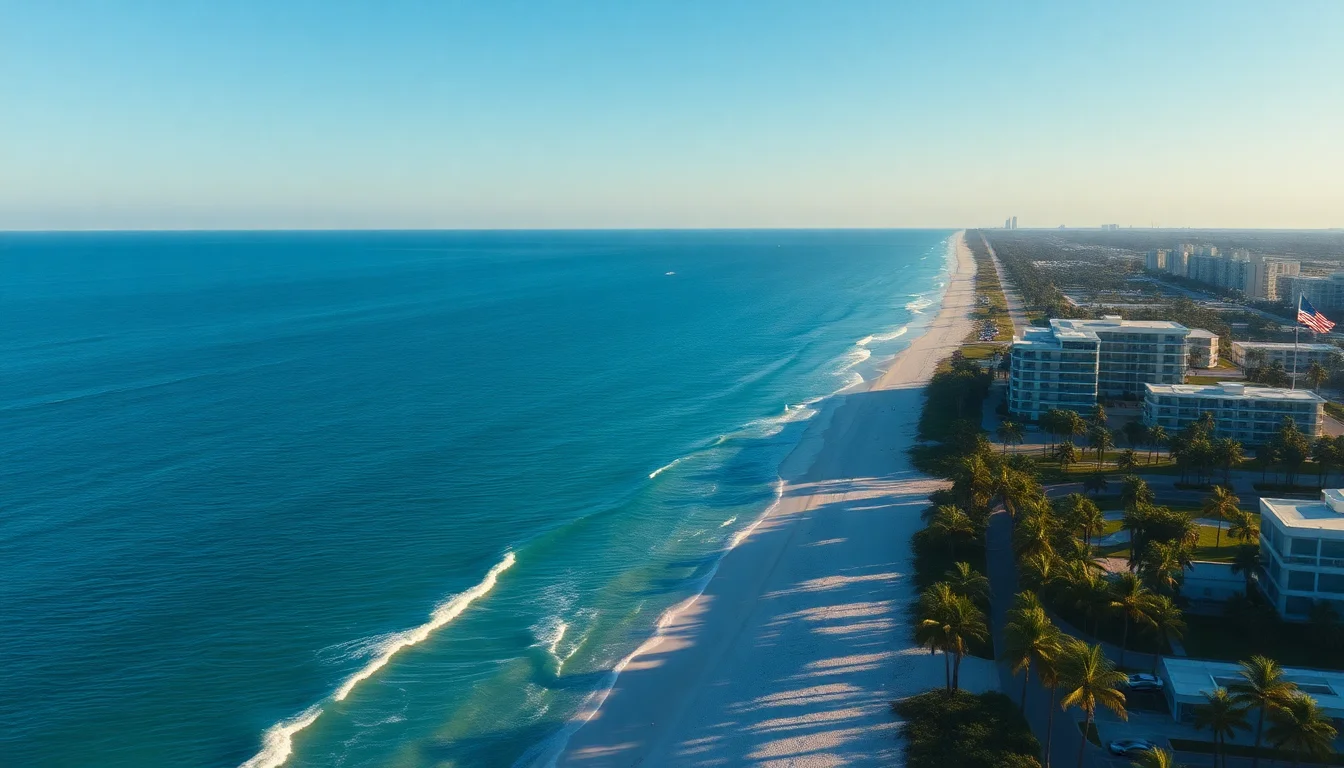
All creative was distributed via targeted paid social, geo-fenced to Surfside and the surrounding Miami-Dade area. Every impression was served to someone who could actually vote in the race. There was no wasted reach on audiences outside the electorate.
The Numbers
Political advertising is an attention game. Reach and frequency are the KPIs that matter — not clicks, not engagement rate, not cost-per-lead. The campaign delivered:
— 440,453 people reached in the Surfside and Miami-Dade area
— 2× average frequency — the average person saw the campaign twice
— $6.80 CPM — cost per thousand impressions
That CPM is worth noting. Dense South Florida markets with precise political targeting routinely run at $10–$15 CPM for paid social. Getting to $6.80 in a competitive local market — with compliant political targeting constraints — required tight creative selection and disciplined audience management. According to Pew Research's Social Media Fact Sheet, social media is now the primary channel through which Americans under 50 encounter political content. That audience was exactly where this campaign needed to be.
The reach number — 440,453 — represents a significant proportion of the eligible electorate across the broader area. Most of those people saw the campaign more than once. That's how name recognition gets built: not through a single viral moment, but through consistent, affordable repetition across a defined geography.
The Result
David Weingot won. He took 15.7% of the vote, placing third among the four successful candidates in the at-large race. Donna Dayana Benmergui (15.8%) and Andrea Travani (14.8%) also won seats. Incumbent Gerardo Vildostegui held his seat by six votes — a margin narrow enough to trigger a recount.
David's margin was not that narrow. His social media presence had done its job.
In the days following the result, he described voters approaching him on election day because they recognised his face — specifically attributing that recognition to the social media campaign. That's the clearest possible proof of concept for what paid social reach actually does in a local election: it converts an unknown candidate into a familiar one, and familiar candidates get votes.
Running paid social for a local political campaign is not fundamentally different from running it for a local business. The mechanics are the same — reach, frequency, creative performance, geo-targeting. The urgency is more concentrated, and the compliance requirements are specific, but the underlying work is what we do every day. This campaign ran on the same infrastructure we use for service business clients, adapted for a different kind of brief.
What This Means If You're Running a Campaign
Most agencies won't touch political advertising. The compliance setup takes time they don't have in their standard process, and the short timeline makes the engagement model they're built around feel uncomfortable. So campaigns either go dark on paid social or end up with agencies that don't really know what they're doing with it.
Lightning Agency took this campaign on because we move fast and the mechanics aren't foreign to us. We'd set up political ad accounts before. The disclosure requirements under FEC advertising guidelines are straightforward once you've done it. And we had creative production in-house — short-form video, static image, copy — so there was no lag between strategy and execution.
If you're looking for a paid social partner for a political campaign and need someone who can move in days rather than weeks, that's the exact kind of brief we take on.
Frequently Asked Questions
Yes. We managed the full paid social campaign for Weingot for Surfside — ad account setup, creative production, targeting, and ongoing management through to election day. If you need an agency that can handle political paid social quickly and compliantly, get in touch.
The campaign ran on paid social platforms with geo-targeting applied to the Surfside and Miami-Dade area. Platform selection was based on where the local electorate was most active and where precise geo and demographic targeting was most effective.
Reach and frequency are the primary paid social KPIs for an awareness-driven political campaign. The real-world proof of concept is voter recognition on polling day — which is exactly what David Weingot reported. The ultimate metric is the result, and he won.
It depends on the size of the electorate, the competitive landscape, and how much of the local area you need to reach. There's no universal answer, but we can give you a straight number based on your specific race, geography, and timeline. Book a call and we'll work it out.
Fast. Political ad accounts require specific compliance setup but we've been through it. If you have an upcoming race and need paid social running in days rather than weeks, that's the kind of brief we're built for.




.png)










.png)
.png)
.png)
.png)
.png)

.png)
.png)
.png)
.png)
.png)


.png)
.png)


