

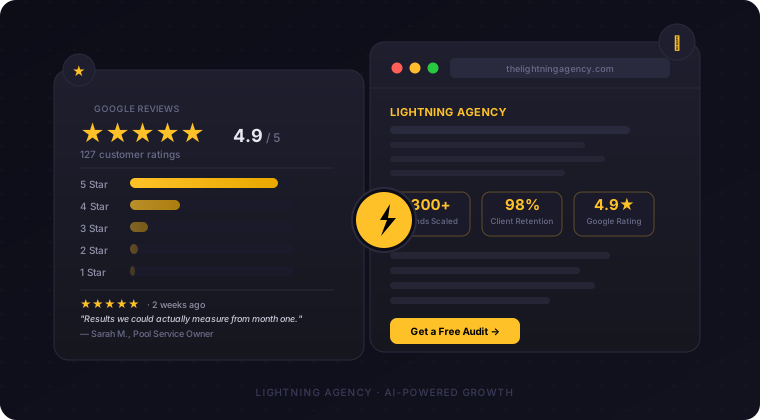
Learning how to get more Google reviews isn't just about boosting your star rating — it's about building a systematic approach to customer feedback that drives more leads to your business.
Google reviews directly impact your local search rankings, with 87% of consumers reading online reviews for local businesses before making a purchase decision. The businesses that consistently generate positive reviews aren't just lucky — they have systems in place that make asking for feedback feel natural and timely.
Why Google Reviews Matter More Than Ever
Google reviews serve as social proof that influences both search algorithms and customer behavior. When your business has fresh, relevant reviews, Google sees it as an active, trustworthy business worth ranking higher in local search results.
But quantity isn't everything. Google's own guidelines emphasize that authentic reviews from real customers carry more weight than bulk review campaigns that feel forced or incentivized.
The businesses that dominate local search results typically have three things in common: consistent review generation, detailed customer responses, and review content that includes relevant keywords naturally.
Strategy 1: Perfect Your Review Request Timing
The moment you ask for a review determines whether you'll get one. Most businesses ask too late — after the customer has moved on mentally from their experience.
The sweet spot is immediately after delivering value, when the customer feels genuinely satisfied. For service businesses, this might be right after completing a job. For retail businesses, it's often 2-3 days after purchase when they've had time to use the product.
Send your review request via text message or email with a direct link to your Google Business Profile. Make it one click to leave a review — any extra steps kill conversion rates.
Strategy 2: Make Review Requests Personal and Specific
Generic review requests get ignored. Effective ones reference specific details from the customer's experience.
Instead of 'Please leave us a review,' try: 'Thanks for choosing us for your pool resurfacing project, Sarah. If you're happy with how your backyard looks, would you mind sharing your experience on Google?'
This approach works because it reminds the customer of their specific positive outcome and makes the request feel personal rather than automated. When customers see you remember their project details, they're more likely to reciprocate with a thoughtful review.
Strategy 3: Respond to Every Review (Yes, Every Single One)
Responding to reviews isn't just good customer service — it's a ranking factor. Google notices businesses that actively engage with customer feedback and tends to show them more prominently in local search results.
Respond to positive reviews with genuine gratitude and specific details about what the customer mentioned. For negative reviews, address concerns professionally and offer to resolve issues offline. This shows future customers that you care about their experience.
Your responses also provide opportunities to naturally include location and service keywords, which can help with local SEO optimization when potential customers search for businesses in your area.
Strategy 4: Create Review-Worthy Moments During Service
The best reviews come from customers who feel genuinely impressed by their experience. This means going beyond meeting expectations to creating moments that customers want to share.
Simple tactics include sending progress photos during longer projects, following up the day after service completion, or including small extras that exceed what was promised. These moments create positive emotions that customers naturally want to express in reviews.
When customers feel surprised and delighted by your service, they don't need to be convinced to leave a review — they want to tell others about their experience.
Strategy 5: Use Technology to Scale Your Review Process
Manual review requests don't scale as your business grows. Smart businesses use automated systems that trigger review requests based on customer behavior and project completion.
CRM systems can automatically send review requests after invoices are marked paid, service calls are completed, or specific time periods have passed. The key is making automation feel personal by including customer names and project details.
Some businesses integrate review management with their digital marketing campaigns, using positive reviews as social proof in retargeting ads to previous website visitors.
Strategy 6: Address Negative Reviews Strategically
Negative reviews aren't disasters — they're opportunities to demonstrate your customer service publicly. How you handle criticism often matters more to potential customers than the criticism itself.
Respond quickly and professionally to negative reviews. Acknowledge the customer's concern, apologize for any inconvenience, and offer to resolve the issue privately. Never argue or get defensive in public responses.
Sometimes, excellent responses to negative reviews convert skeptical readers into customers because they see how you handle problems when they arise.
Strategy 7: Monitor and Track Your Review Performance
You can't improve what you don't measure. Track your monthly review volume, average rating changes, and response rates to identify patterns and improvement opportunities.
Monitor competitor review strategies in your area. Notice what types of reviews they're getting and how customers describe their experiences. This competitive intelligence can reveal gaps in your own service offerings or messaging.
Many successful businesses allocate part of their digital marketing budget specifically to review generation and management, treating it as seriously as other customer acquisition channels.
Common Mistakes That Kill Review Generation
The biggest mistake businesses make is asking for reviews too generically or too late in the customer journey. Timing and personalization determine success more than the number of requests you send.
Another common error is neglecting to respond to reviews consistently. Customers notice when businesses ignore their feedback, and it discourages others from leaving reviews in the future.
Finally, many businesses focus only on generating new reviews while ignoring the need to address existing negative ones. Unresolved complaints stay visible permanently and can outweigh dozens of positive reviews in customer perception.
Frequently Asked Questions
Focus on review quality over quantity. A steady flow of 3-5 authentic reviews per month typically performs better than sporadic bursts of many reviews. Google's algorithm favors consistent review generation over large volumes in short periods.
Google's terms of service prohibit incentivizing reviews with discounts, payments, or other rewards. Focus on earning reviews through excellent service and timely, personal requests rather than offering compensation.
The optimal timing varies by business type. Service businesses should request reviews within 24-48 hours of job completion, while product businesses often see better results waiting 3-7 days so customers can experience the full value.
Always respond to negative reviews publicly first with a professional acknowledgment and offer to resolve the issue privately. This shows other potential customers that you take feedback seriously and are committed to customer satisfaction.
You can flag reviews that violate Google's policies, but legitimate negative reviews cannot be removed. Focus on generating more positive reviews and responding professionally to criticism rather than trying to eliminate negative feedback.









.png)















.png)
.png)
.png)
.png)
.png)

.png)
.png)
.png)
.png)
.png)


.png)
.png)


