

How to choose a digital marketing agency for your small business comes down to five questions — and most agencies hope you never ask them. Get the answers wrong and you're looking at a 12-month contract, a report full of numbers that mean nothing, and a phone that still isn't ringing.
Small business owners don't have the budget to gamble on a bad fit. Every dollar spent on an agency that can't deliver is a dollar that didn't go toward payroll, inventory, or the next hire. The good news: bad agencies tend to give themselves away in the first sales call, if you know what to listen for.
Question 1: How Do You Report Results?
Ask this before you ask about price. The answer tells you everything about whether an agency is chasing your revenue or your renewal.
A red flag answer sounds like "we'll show you impressions, reach, and engagement growth." Those numbers look good in a slide deck and mean almost nothing to your bank account. According to HubSpot's marketing benchmarks, businesses that track revenue-attributed metrics consistently outperform those relying on engagement alone when it comes to justifying marketing spend.
A proper answer names calls, form fills, booked jobs, and cost per lead — tied to a dashboard you can check anytime, not a PDF that shows up once a month with a smiley face on the cover.
Question 2: Is This Strategy Built on My Data or a Template?
This is the question that separates agencies from content mills. Plenty of shops run the exact same playbook for a plumber in Ohio and a landscaper in Florida, swapping out the city name and calling it strategy.
Ask directly: "Where does my content and keyword targeting come from?" If the answer involves your actual Google Search Console data, your competitors' rankings, and your specific search opportunities, you're in good hands. If it's a generic content calendar, walk. This is the difference between real SEO services and a subscription to blog posts nobody searches for.
Every piece of content should start with a question: what are people actually typing into Google to find a business like yours? An agency that can't answer that in the first meeting isn't running strategy — it's running a template.
Question 3: What's Included, and What Costs Extra?
Hidden fees are the oldest trick in the agency playbook. The proposal looks reasonable until month two, when you find out "content creation" doesn't include images, "reporting" doesn't include a call to walk through it, and "SEO" doesn't include the technical fixes that actually move rankings.
Get a full breakdown in writing before you sign anything. The full package breakdown should list exactly what's included at each tier — blog posts, page builds, ad management, reporting cadence — with no asterisks. If an agency won't put pricing and inclusions in writing, that's the answer to your question right there.
The Federal Trade Commission's guidance on business contracts is worth a skim before signing anything long-term — it covers the basics of what should be spelled out clearly in any service agreement, marketing included.
Question 4: How Long Is the Contract?
Twelve-month contracts protect the agency, not you. If the work is good, you'll want to keep them anyway. If the work is bad, you're stuck paying for ten more months of nothing.
Ask how long you're locked in and what happens if you want out. A confident agency offers month-to-month terms, or close to it, because they know the results will keep you around. An agency that needs a year-long contract to "prove ROI" is often an agency that knows the first few months won't show much.
The U.S. Small Business Administration's guidance on hiring outside vendors makes the same point: clear exit terms protect small businesses that don't have legal teams to fight a bad contract later.
Question 5: Who Actually Works on My Account?
The person on your sales call is rarely the person writing your content or managing your ad spend. That's not automatically a problem — but you need to know who's actually in the account, how experienced they are, and how often they change.
Ask for names. Ask how long they've been running Google Ads management or SEO campaigns, and ask what happens if that person leaves. High account manager turnover is one of the most common reasons small business marketing quietly falls apart — new person, new strategy, same fees.
You can also check who's actually behind the agency. Read the founder's background before you sign — an agency built by someone who's actually managed ad spend and client accounts tends to behave differently than one run by a sales team with a subcontracted fulfillment shop in the back.
The Checklist to Take Into Your Next Agency Call
Print this or keep it open on your phone during the pitch. If an agency dodges more than one of these, keep looking.
• Do they report revenue metrics (calls, leads, bookings) instead of just impressions and reach?
• Is their strategy built from your search data, or a generic industry template?
• Is pricing and scope written down with zero hidden extras?
• Is the contract month-to-month, or close to it, after an initial term?
• Do you know exactly who works on your account and how experienced they are?
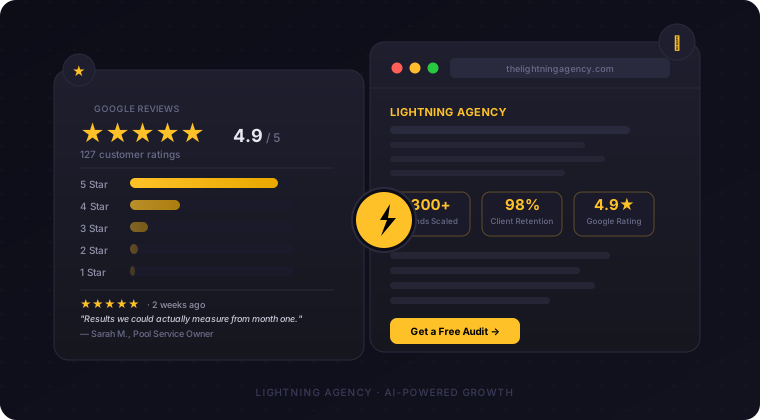
• Can they show you real client results, not just stock case study language?
• Do they explain what they're doing in plain terms, or hide behind jargon?
See How Lightning Agency Answers These Questions
You've probably been burned before — a vague report, a locked-in contract, an account manager who disappeared after month three. Those are exactly the problems this checklist is built to catch, and they're the reasons most small business owners stay quiet about their marketing spend instead of bragging about it.
Lightning Agency answers every question on this list before you ask it: revenue-focused reporting, data-built strategy powered by Zeus, transparent pricing, and month-to-month terms after an initial six-month period. See how the packages break down and decide for yourself whether the answers hold up.
Frequently Asked Questions
Look for revenue-based reporting, strategy built from your actual search and ad data, transparent pricing with no hidden extras, short contract terms, and a named team you can talk to. Anything vaguer than that is a warning sign.
Ask how they report results, whether your strategy is custom or templated, what's included versus what costs extra, how long the contract locks you in, and exactly who will work on your account day to day.
Ask for case studies with real numbers — leads generated, ranking improvements, revenue impact — not just logos and testimonials. A good agency can show you a dashboard or report from an actual client, not a polished slide.
It's common, but it isn't necessary. Many agencies now offer month-to-month terms after an initial period because they're confident the results will keep clients without a contract forcing it.
It depends on the service and scope, but small businesses typically invest anywhere from a few hundred to a few thousand dollars per month depending on whether they need SEO, paid ads, content, or a combination. Get itemized pricing so you know exactly what you're paying for.


















.png)















.png)
.png)
.png)
.png)
.png)

.png)
.png)
.png)
.png)
.png)


.png)
.png)


