

Homeowners run an average of 8 searches before they pick up the phone and call a contractor — and SEO for home improvement companies is how you make sure your business shows up during those searches, not your competitor's. Whether you do kitchen remodels, bathroom renovations, decking, roofing, painting, or flooring, the difference between a full pipeline and a slow month often comes down to whether Google can find you.
This isn't complicated. But most home improvement businesses either skip SEO entirely, or hand it off to someone who sends a monthly report full of numbers that don't mean anything. Here's what actually works.
How Homeowners Search for Home Improvement (and Why It Matters)
Homeowners don't just search for a contractor once. They go through distinct stages, and each stage uses different language. Understanding that is the foundation of an effective SEO strategy.
The first stage is research. Someone's thinking about a bathroom remodel but hasn't committed. They search things like "how much does a bathroom remodel cost" or "bathroom remodel ideas small space." They're not ready to hire — they're gathering information. If your site has a cost guide that answers those questions, you're already building trust before they've even started comparing contractors.
The second stage is comparison. Now they know roughly what they want and what it costs. They're searching "bathroom remodel contractors near me" or "best kitchen renovation companies in [city]." This is where your service pages, reviews, and Google Business Profile do the heavy lifting.
The third stage is ready to hire. They've narrowed it down. They search "[your service] + [your city]" or go straight to Google Maps. This is where local SEO and proximity matter most — and where a fully built-out Google Business Profile converts browsers into booked jobs.
The Pages You Need to Build
Most home improvement websites have a homepage, an about page, and maybe a contact form. That's not enough. Google needs specific pages to rank you for specific searches — and homeowners need specific pages to trust you enough to call.
Individual Service Pages
Each service you offer deserves its own dedicated page. Not a list on one page — separate URLs. A kitchen remodeling page, a bathroom renovation page, a decking page, a fencing page, a painting page, a flooring page. Each one should cover what the service includes, what the process looks like, typical timelines, and what to expect on cost.
Why separate pages? Because Google ranks pages, not websites. If you want to rank for "deck builder in Orlando," you need a page specifically about deck building. A generic "services" page won't cut it.
Tip: Each service page should be at least 600 words, include your city name naturally in the copy and headings, and answer the questions homeowners actually ask — not just a list of what you do.
Service + City Pages
If you serve multiple towns or suburbs, build a page for each combination. "Kitchen Remodeling in Kissimmee." "Bathroom Renovation in Winter Garden." "Roofing Contractor in Clermont." These pages capture the "near me" and city-specific searches that high-intent homeowners use when they're ready to hire.
Don't just duplicate the same page with the city name swapped in. Write something specific to each location — mention local neighborhoods, how long you've served the area, any projects you've completed there. Google can tell the difference between a real local page and a copy-paste job, and so can homeowners. Our local SEO services are built specifically for this — creating city pages that rank and convert, not just fill a slot on your sitemap.
Cost Guide Content
According to BrightLocal's consumer research, the majority of local service searches start with an informational query before a transactional one. Cost guides capture homeowners at the research stage and keep your brand in front of them until they're ready to call.
"How Much Does a Kitchen Remodel Cost in 2026?" "What Does a Bathroom Renovation Cost?" "Deck Building Cost Guide." These pages don't just drive traffic — they drive the right traffic. Someone reading your cost guide is already thinking about hiring someone. If your content is helpful and your contact details are visible, you're first in line when they're ready.
Your Google Business Profile Is Not Optional
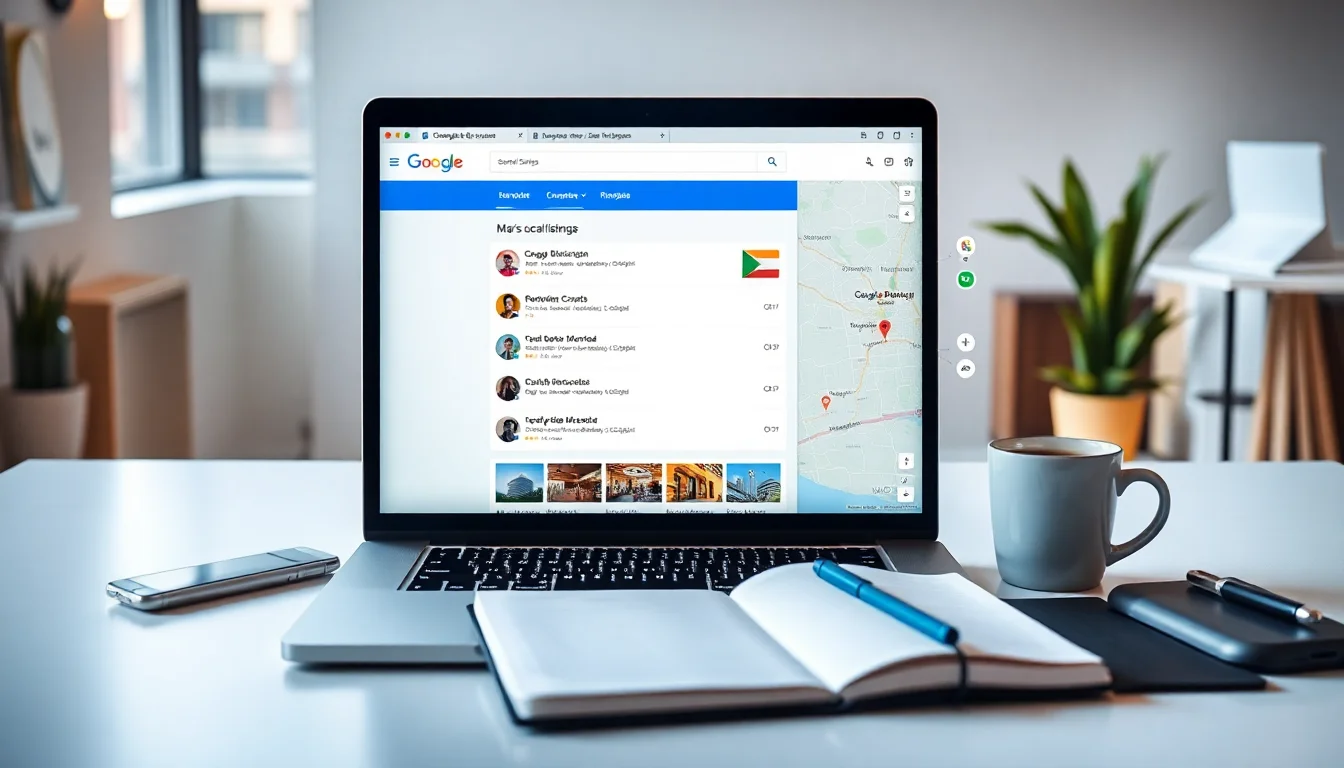
For home improvement companies, Google Business Profile (GBP) is often the single highest-return SEO activity. When someone searches "bathroom remodeler near me," the map pack — those three listings with the star ratings and phone numbers — shows up before the organic results. If you're not in that map pack, you're invisible to the most ready-to-buy searchers.
Getting your GBP right isn't difficult, but most contractors leave it half-finished. Here's what actually moves the needle:
— Every service you offer listed in the services section — not just your primary category
— Your service area set correctly (cities and suburbs you actually work in, not just your postcode)
— Photos added regularly — before and after shots, work in progress, completed projects
— Questions answered in the Q&A section before homeowners even have to ask
— Posts updated at least twice a month with recent projects, seasonal offers, or helpful tips
Google treats an active, complete GBP profile as a trust signal. It tells the algorithm your business is real, active, and worth showing to searchers.
Note: Your GBP name should match exactly what's on your website and any directories you're listed in. Inconsistencies across the web hurt your local rankings more than most business owners realise.
Reviews: The Shortcut That Isn't a Shortcut
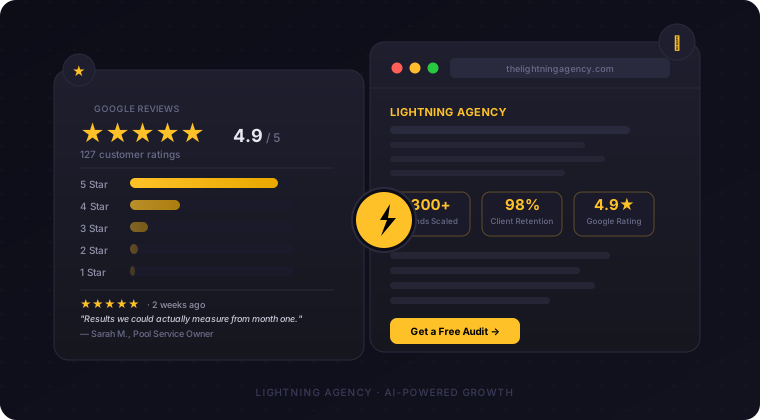
Reviews do two things. First, they influence your Google Maps ranking — Moz's Local Search Ranking Factors research consistently shows review quantity and quality as major ranking signals. Second, they convert. A contractor with 47 five-star reviews beats a contractor with a better website and 6 reviews every time.
The problem is most contractors don't have a system for getting reviews. They do great work, the homeowner is happy, and then... nothing happens. Here's the fix: ask within 48 hours of completing a job, while the experience is fresh. Send a direct link to your Google review page — don't make them hunt for it.
If you do 10 jobs a month and convert even 30% of happy clients into reviews, you'll have 36 new reviews by the end of the year. Most of your competitors have fewer than 20 total. That gap compounds.
Common SEO Mistakes Home Improvement Companies Make
1. One page for all services: Listing every service on a single page means you rank for nothing specifically. Build individual pages for each service you want to be found for.
2. No city pages: If you serve five suburbs but your website only mentions your main city, you're invisible in four of them. Service + city pages capture the searchers who are most ready to hire.
3. Ignoring Google Business Profile: An incomplete or inactive GBP profile is leaving map pack rankings on the table. Most home improvement searches end with someone calling from Google Maps — not clicking through to a website.
4. No cost guide content: Homeowners research costs before they call anyone. If you don't answer that question, a competitor who does gets the head start on that relationship.
5. Not asking for reviews: Happy customers don't leave reviews on their own. Without a system to ask, you'll stay stuck at a handful of reviews while competitors with a simple follow-up process pull ahead.
6. Keyword stuffing instead of answering questions: Repeating "kitchen remodeler Orlando" 20 times on a page doesn't work. Google ranks pages that answer questions comprehensively. Write for the homeowner, and the rankings follow.
If you want a deeper breakdown of what a proper SEO build looks like for a contractor business, our remodeling contractor SEO page covers the full playbook — from site structure to local authority building.
What to Prioritise First
If your site is starting from scratch, here's the order that makes sense:
1. Get your Google Business Profile fully filled out and verified
2. Build individual service pages for your top three services
3. Add city pages for every suburb you actively work in
4. Write one cost guide for your most searched service
5. Put a review-request system in place
You don't need to do all of this in week one. But you do need to start. Every month you don't have a service page for "bathroom remodeling in [your city]" is a month that lead goes to whoever does.
The SEO services we run for home improvement companies follow this exact structure — built around the searches your customers are actually doing, not a template designed for a different industry.
Turn Your Website into a Lead Machine for Your Renovation Business
Most home improvement business owners are great at the work. They're not great at marketing — and that's not a criticism, it's just not what they signed up for. The frustrating part is watching a less skilled competitor take jobs you should be winning, purely because they show up on Google and you don't.
SEO fixes that. Not overnight, but steadily and permanently. The pages you build this month keep working for you next year. The reviews you collect this quarter compound. Get the foundations right and the leads follow. Book your free strategy session or get in touch to see what's included.
Frequently Asked Questions
Most home improvement businesses start seeing meaningful ranking movement within 3–4 months of building proper service and city pages. Google Business Profile improvements can show results faster — sometimes within weeks. The full compounding effect typically shows at the 6–12 month mark.
You need both. GBP gets you into the map pack for local searches. A website gives you somewhere to rank for longer-tail searches like cost guides and specific service queries — and it's where homeowners go to vet you before calling. One without the other leaves leads on the table.
There's no magic number, but in most mid-sized cities, contractors in the map pack top three tend to have 50+ reviews. More importantly, you need a steady stream of new reviews — Google weighs recency. Ten reviews from last year matters less than five reviews from last month.
Yes — if you genuinely serve those areas. Don't build pages for cities you'd never actually travel to. But for every suburb or town where you regularly do jobs, a dedicated service + city page is one of the highest-return pages you can build.
Google Ads gets you to the top of search results immediately but stops the moment you stop paying. SEO builds rankings that compound over time — a page that ranks well keeps driving leads without ongoing spend per click. Most home improvement companies benefit from running both: ads for immediate jobs, SEO for long-term pipeline.















.png)














.png)
.png)
.png)
.png)
.png)

.png)
.png)
.png)
.png)
.png)


.png)
.png)


